10 Historical Conflicts Still Relevant Today
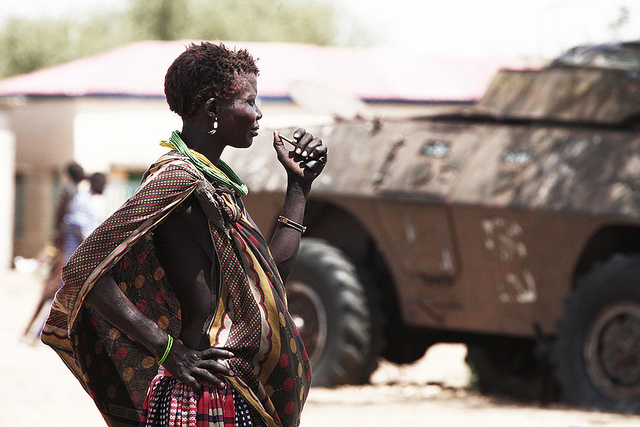
9. The North-South Conflict in Sudan
The Sudanese Civil War was a conflict from 1983 to 2005 between the central Sudanese government and the Sudan People’s Liberation Army. It was largely a continuation of the first Sudanese Civil War of 1955 to 1972. Although it originated in southern Sudan, the civil war spread to the Nuba mountains and Blue Nile. It lasted for 22 years, and is one of the longest civil wars on record. The war resulted in the independence of South Sudan six years after the war ended.
Kingdoms and great powers based along the Nile River have fought against the people of inland Sudan for centuries. Since at least the 17th century, central governments have attempted to regulate and exploit the undeveloped southern and inland Sudan. Many sources describe the conflict as an ethnoreligious one where the Muslim central government’s pursuits to impose sharia law on non-Muslim southerners led to violence, and eventually to the civil war.
When the British governed Sudan as a colony they administered the northern and southern provinces separately. The south was held to be more similar to the other east-African colonies — Kenya, Tanganyika, and Uganda — while northern Sudan was more similar to Arabic-speaking Egypt. Northern Arabs were prevented from holding positions of power in the south with its African traditions, and trade was discouraged between the two areas. However, in 1946, the British gave in to northern pressure to integrate the two areas. Arabic was made the language of administration in the south, and northerners began to hold positions there. The southern elite, trained in English, resented the change as they were kept out of their own government. After decolonization most power was given to the northern elites based in Khartoum, causing unrest in the south.